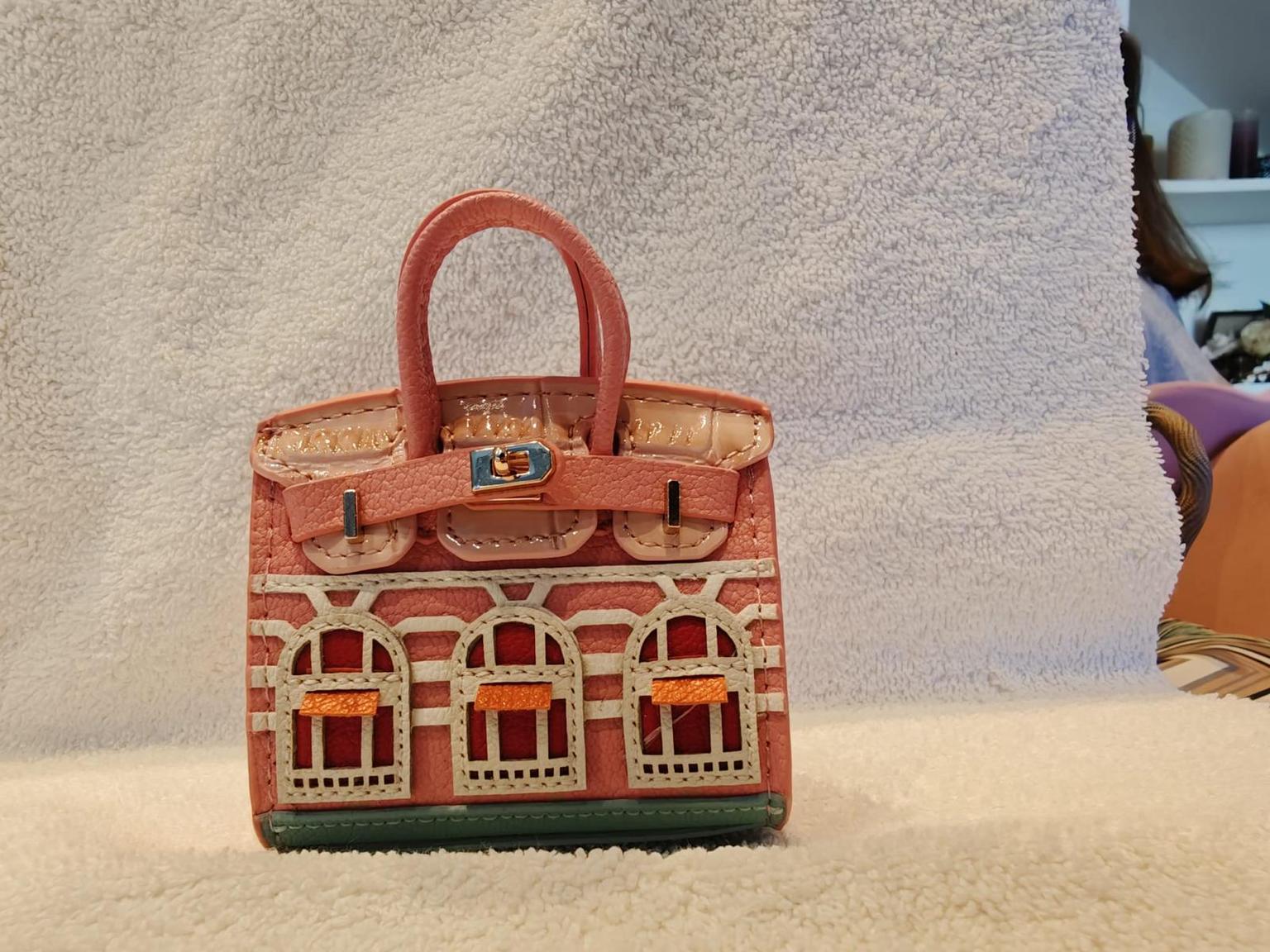
What Makes a Great Mini Bag Charm Keychain
The best mini bag charm keychains share a few things: a coherent silhouette, proportions that look intentional rather than novelty, and product facts that are specific enough to assess before purchase. Materials matter too, so look for an exact customer-facing material description, clear close photography, care guidance, and a returns policy rather than relying on broad quality language.
How to Style a Mini Bag Charm Keychain
Mini bag charm keychains work on almost every bag style. Clip one to the handle of a tote for a pop of colour and structure. Attach it to the zipper pull of a crossbody to add dimension. Layer two contrasting micro bag charms on a larger tote for an editorial look that is easy to pull apart and reassemble. On keys, a mini bag charm keychain gives a plain keyring personality and makes it easier to pull keys from a bag by touch. The most wearable approach is to match — or deliberately contrast — the charm's colour to your bag rather than defaulting to identical leather, which risks reading as a spare part rather than an accessory.
Mini Bag Charm Keyring vs Keychain: What's the Difference?
The terms mini bag charm keyring and mini bag charm keychain are often used interchangeably, though there is a loose distinction. A keychain implies a chain between the charm body and the attachment point, while a keyring implies a direct metal loop. In practice, most mini bag charm keychains on the market attach via a swivel clip or lobster clasp rather than a true chain, making the terms functionally the same for most buyers. What matters more is the quality of the attachment mechanism: look for a smooth, secure action on the clasp that will not accidentally release from a bag handle under the weight of keys.
Caryina's Mini Bag Charm Keychain Collection
The Facade Mini is designed in Positano, Italy, as a bag charm and tiny essentials case. Caryina presents its miniature silhouette, textured faux-leather description, colourways, price, availability, delivery market, and returns terms directly; dimensions, attachment guidance, and named capacity examples appear only after product-specific verification.